How to use Off2Class, online lessons with Skype
Welcome to the new Off2Class! Today, we would like to show you how to use...

5 min read
Share this post


M4.1 – Advisability-Should – 1
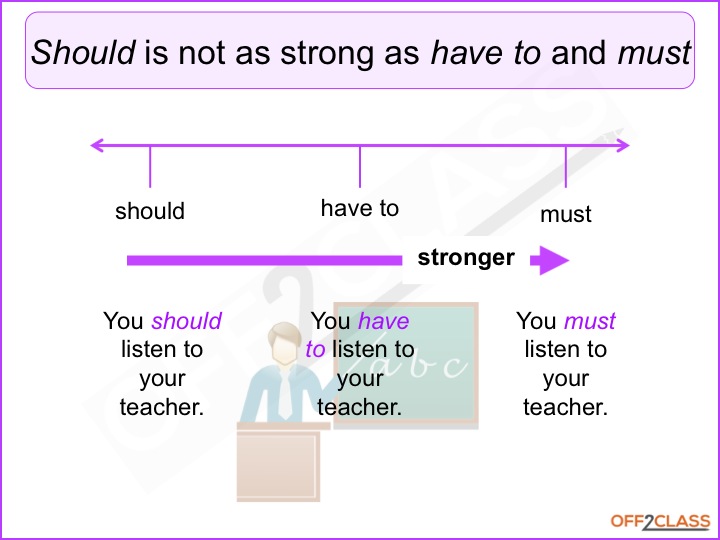
We start our series by introducing the use of should to give a suggestion (e.g. you should eat your vegetables) or to say something is a duty or a responsibility (e.g. you should lock the door when you leave). We then introduce the construction of I think you should… to express advisability. We also take a look at the negative form of should, He shouldn’t go out tonight, as an alternative form to express advisability. We then compare the use of should to the use of have to and must (Should is not as strong as the expression of have to and must).
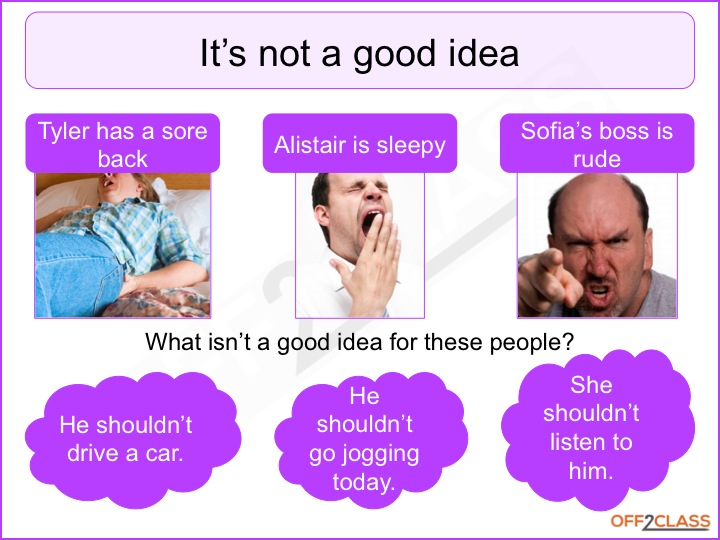
M4.2 – Advisability-Should-OughtTo – 2
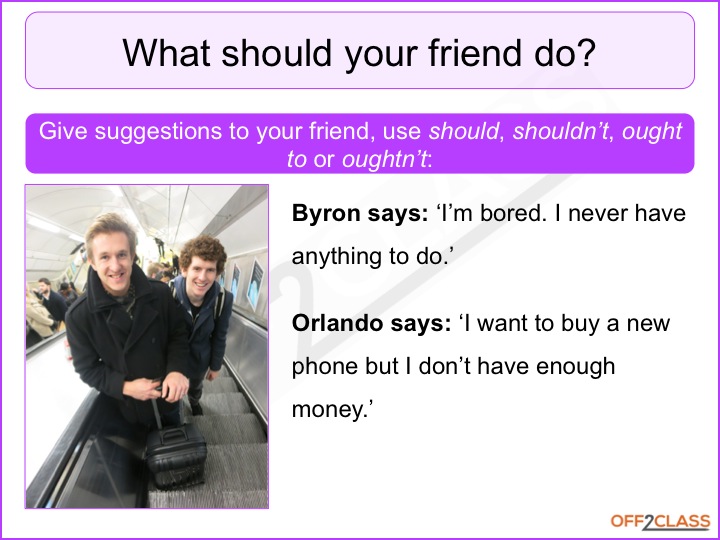
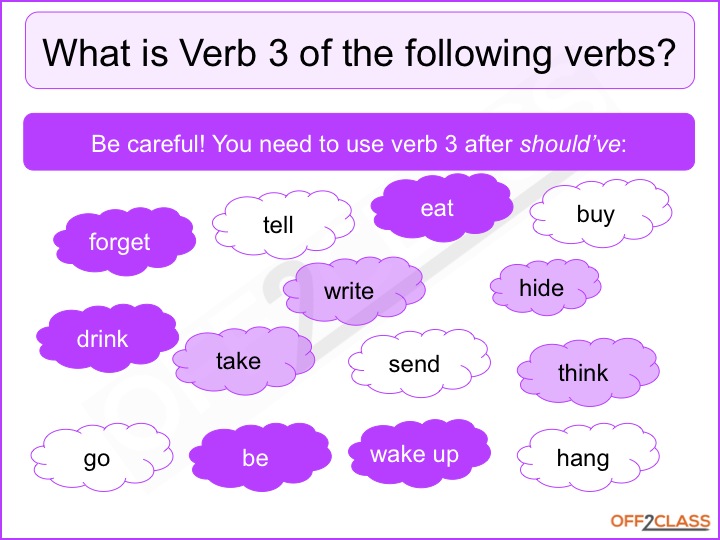
We start by introducing ought to. Should and ought to can be used interchangeably to express necessity. We also introduce the negative of ought to (oughtn’t). We then examine the use of should have, to express something, you should have done, in the past (e.g. I should have left earlier because I got stuck in traffic). We then take a quick review of Verb 3 constructions (which need to be used with should have).
M4.3 – Advisability-Should-OughtTo-HadBetter – 3
In our third lesson teaching should and ought to to express advisability, we introduce had better. We introduce had better as stronger than should and have to, but not as strong as must:
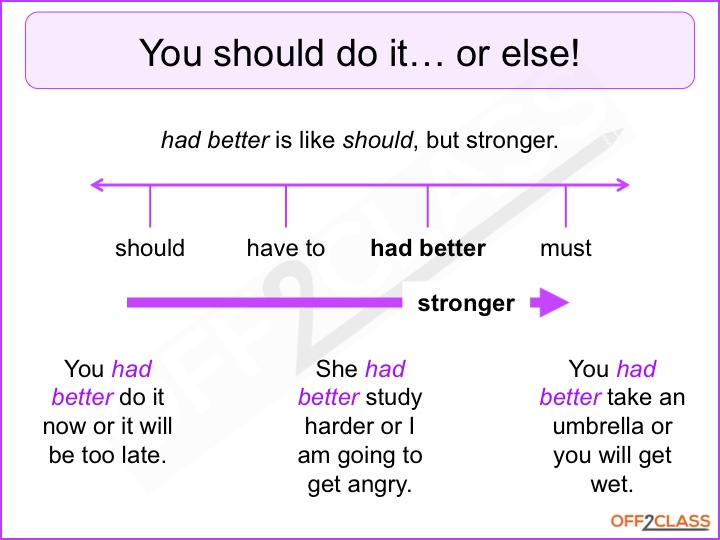
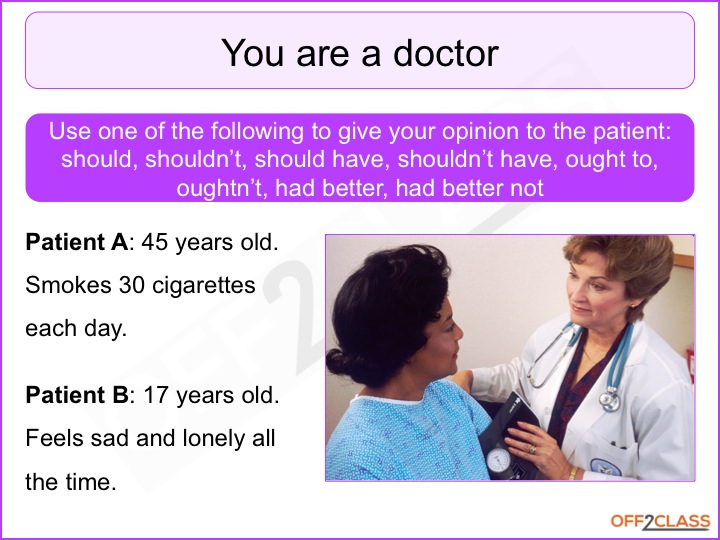
We generally use had better for suggestions (you had better leave now or you’ll be late!). Had better is used for the present and future, but not the past. We can use had better have for the past (but it’s only used in spoken English). We finalize the series with a number of situational exercises where the student can give advice:
Share this post




5 Comments
Excellent examples and explanation!
Thanks Dany!
Thank you, it helps me a lot to get more explanation. Keep it going!
Thanks, Tri! We’re so glad you’re enjoying these blog posts.